

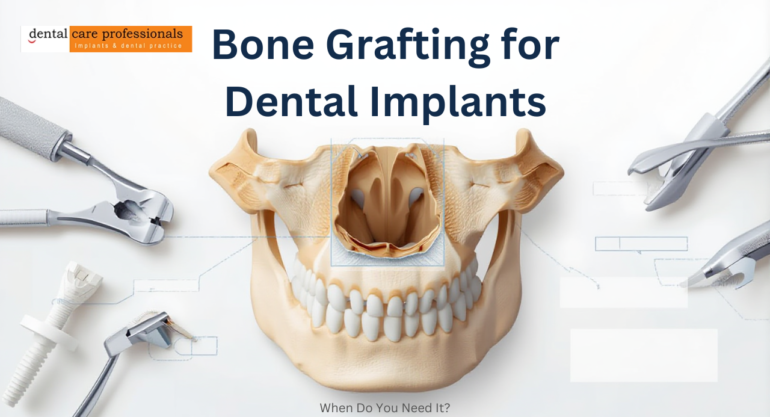
Bone grafting for dental implants can be a confusing term or even a frightening name that comes to the mind of many individuals who are planning to obtain a dental implant. However, as a matter of fact, it is a mere, routine kind of operation that allows your implant to remain strong and functional throughout your life. Whether you’ve lost a tooth years ago or recently, this guide helps you understand exactly when bone grafting becomes necessary, how it works, and what to expect, all explained in a warm, easy-to-understand way. If you’re new to the implant process, it helps to first understand the complete treatment journey explained in our guide on things to know before getting dental implants.
In this blog, we’ll walk through real reasons dentists recommend Bone Grafting, how it affects your implant timeline, and the signs that show you might need it before placing the Best Dental implants in Coimbatore.
Why So Much about Bone with Implants?
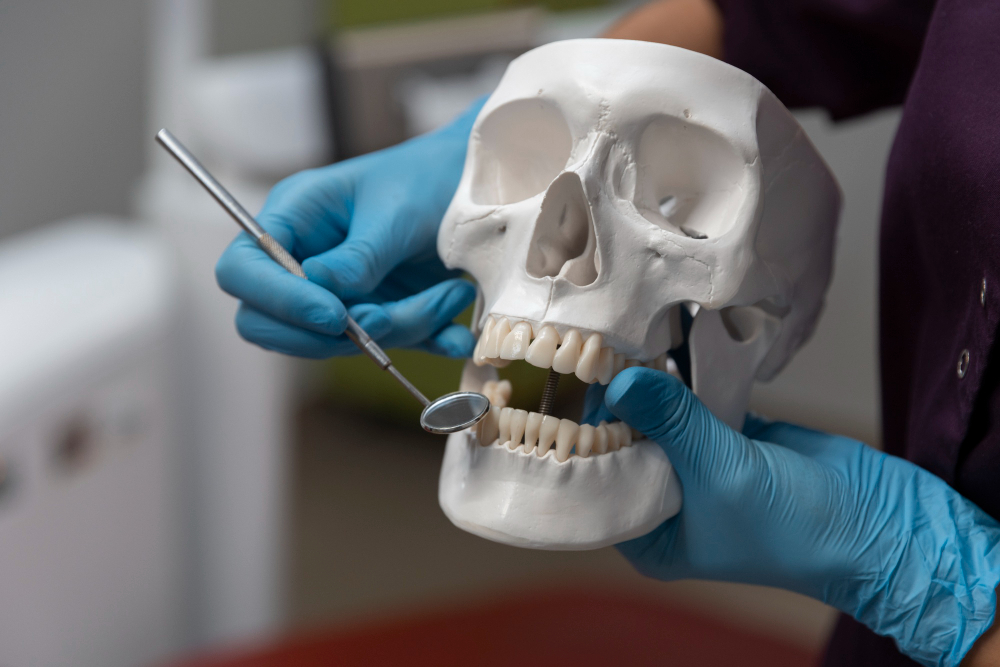
A healthy and strong jawbone is the only one, fundamental condition of the dental implants. When there is a tooth, the process of chewing will instinctively work the bone and make it active and healthy. But once a tooth is removed or lost:
- The bone slowly starts shrinking
- The jaw loses height and width
- The implant may not have enough support
Bone loss is not usually painful and most people are not aware of it until the dentist takes scans when one is attending a check up. Bone grafting restores the lost bone, providing your implant with a strong base- just as you would before constructing your house.
What is the time that you actually need bone grafting?
1. When a Tooth Has Been Missing a Long Time.
The bone around the tooth is likely to become thin when the tooth has been lost over several months or years.
Patients often hear:
“Your implant can be placed, but we need to rebuild a bit of bone first.”
This is one of the most common reasons for grafting.
2. When You Had a Previous Extraction Without Grafting
If you had an extraction earlier in life and the dentist didn’t fill the socket with graft material, bone shrinkage may have already begun.
For many patients, this becomes noticeable only when they plan for an implant.
3. When Infection Damaged the Bone
Bone can further be eroded by untreated cavities, gum disease or infections. A dentist is not able to plant the implant in the weak, infected, or damaged bone, it is necessary to rebuild it first.
4. In case the Bone is eroded by Wisdom Tooth Damage.
The affected wisdom teeth may bulge out pushing against the adjacent teeth, undermining the supporting bone. The opposite also happens: deep infections around wisdom teeth create hollow spaces in the jaw.
5. When the Sinus Is Too Close to the Upper Back Teeth
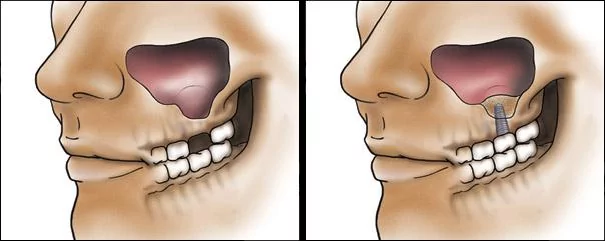
In the upper jaw, especially near molars, the sinus cavity often expands downward once a tooth is removed.
This leaves very little bone in that area.
A special type of grafting called a sinus lift is done before placing implants.
6. In case of Trauma or Injury Decreased Bone Levels.
The accidents, sports injuries, previous dental work complications can also decrease the levels of the bone and require reconstruction prior to placing an implant.
7. When You Need an Implant with a Longer life, and Greater Stability.
Even if you technically have enough bone, dentists sometimes recommend grafting to strengthen the area for:
- Better support
- A longer-lasting result
- A more natural-looking tooth replacement
This is more especially so among patients who seek very aesthetic outcomes around their front teeth.
How Does Bone Grafting Work? (Simple Explanation)
Bone grafting is not a significant surgery. Here’s what really happens:
- The dentist numbs the area fully.
- A small amount of grafting material (either synthetic or natural) is placed where bone is missing.
- The area is protected with a membrane.
- After the site has been closed it is left to heal naturally.
The graft of your bone is gradually substituted by the healthy bone of yours, over the following couple of months. A high number of patients have indicated that the procedure is not as painful as the extraction procedure itself, more so where it is carried out in a reputable dental clinic in Coimbatore that has a reputation of providing comfort-based treatment.
Does Bone Grafting Hurt?
Not really.
Modern dentistry has made this a pain-free experience.
You may feel mild pressure or swelling for 1–2 days, but most patients return to work the next day, especially when treated by teams experienced in Pain-free Dental implants in Coimbatore.
If pain is your biggest concern, we’ve explained the full experience in detail in our article on will dental implants hurt.”
What is the Time lag after bone grafting before the implantation?
This depends on how much bone was missing:
- Minor grafts (socket preservation): 2–3 months
- Moderate grafts: 3–5 months
- Big grafts/sinus lifts: approximately 6 months or a little bit longer.
In most of the instances, in case the bone loss is not too much, the graft and the implant may be fixed on the same day- time, appointments and money saved.
There are several forms of Bone Grafting: An Express Guide.
Your dentist chooses the type based on your condition:
1. Socket Grafting
Done immediately after extraction to prevent bone loss.
2. Ridge Augmentation
Rebuilds bone that’s already shrunk.
3. Sinus Lift
Adds bone under the sinus for upper molar implants.
4. Onlay Graft
Adds width or height where bone is too thin.
The majority of contemporary clinics prefer minimal invasive grafts and apply innovative types of biomaterials that mix with your bone.
Symptoms that indicate the possibility of bone grafting.
- Your missing tooth area looks “sunken”
- You’ve had gum disease before
- The extraction was complicated
- Scans show low bone height or width
- Your dentist says the implant would be unstable without support
When a patient visits a dentist, these problems are evident as a result of digital X-rays or CBCT scans.
What Will You Do By Not Bone Grafting When You Need It?
Omission of grafting where necessary may cause complications.
- Implant failure
- Gum recession
- Loosening of the implant
- Gaps around the crown
- Pain during chewing
- Shortened implant lifespan
A strong foundation is what makes implants last for decades.
Conclusion
If this sounds like you, then don’t wait. Take just a moment to make an appointment and get the clarity you need, a simple consultation with the Dental Care Professionals team to find out for sure what is best for your situation. We will talk with you, not over you, and fiddle everything out in a plain and straightforward way. We are comfort-seeking, that is, you will never wonder what to do next.
All you need to do is make the call. Everything will be within the competency of the professionals so that small issues will not become even greater than you anticipate. The safest solution is waiting to offer you confidence when you are ready.
FAQs
1. Is bone grafting safe for everyone?
Yes; it is a common procedure and safe for all patients unless you have some conditions counter-indicated by the surgeon to you.
2. Will the graft appear or feel unnatural?
No–that is your body and they grow in a graft with actual bone.
3. Is it possible to perform your bone graft and implant simultaneously?
Yes, in case it is a minor bone problem or moderate.
4. Does bone graft considerably influence the price of an implant?
It will involve a small fee, but it will guarantee stability and the successful longevity of the implant.
5. So what is certain is that one is in need of a bone graft?
The initial visit will involve scanning you with CBCT by a dentist who will be able to measure bone height and width precisely.