

Dental care has evolved rapidly in recent years, moving far beyond traditional methods that once required multiple appointments and long waiting periods. Today, many dental procedures can be completed in just a single visit, thanks to advancements in modern technology. One of the most impactful innovations driving this change is 3D printing in dentistry.
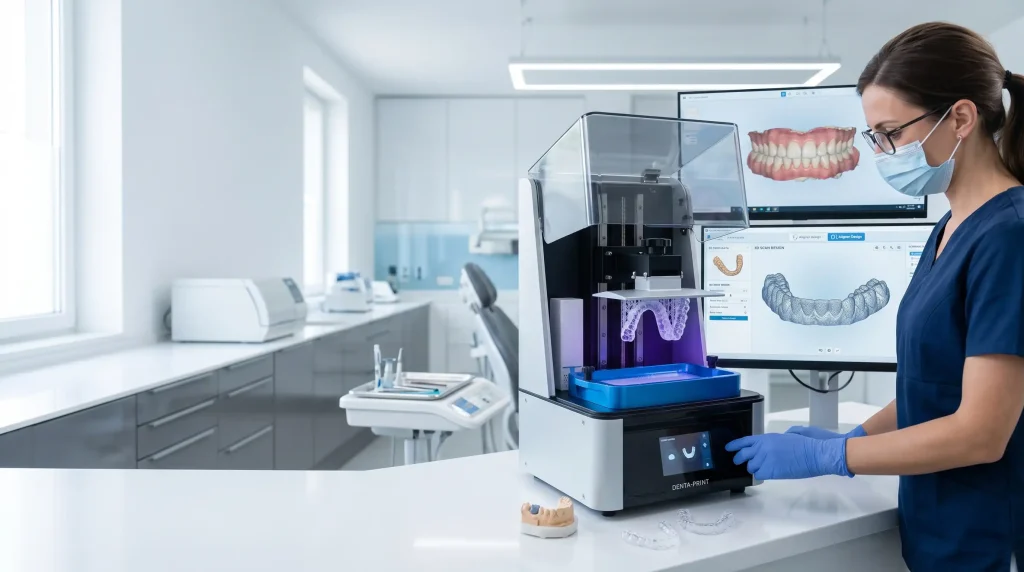
Modern patients now look for quicker treatments, improved accuracy, and a more comfortable experience. Dental clinics that have adopted digital dentistry are meeting these expectations by offering efficient and highly precise solutions. Whether it’s same-day crowns or custom-made clear aligners, 3D printing is transforming how dental treatments are planned and delivered.
In this guide, you’ll discover everything you need to know about this technology—from how it works to the costs involved, along with the latest trends shaping dental technology in 2026.
What Is 3D Printing in Dentistry?
Definition
3D printing in dentistry uses digital files to build dental products layer by layer — crowns, aligners, dentures, and more — using specialized dental-grade materials.
Why It Matters
- Every restoration is built around your exact tooth shape
- No guesswork, no standard sizes
- Far more precise than traditional hand-crafted lab work
Traditional vs Digital Dentistry
| Traditional | Digital / 3D Printing |
| Messy putty impressions | Comfortable digital scan |
| 1–2 week lab wait | Same day or next day |
| Multiple appointments | Fewer visits |
| Manual fabrication | Computer-guided precision |
How 3D Printing Works in Dentistry
Step 1 — Digital Scan
- A small handheld intraoral scanner is used inside your mouth
- It captures thousands of images per second
- Creates an accurate 3D digital model of your teeth in minutes
- No putty, no gagging, no discomfort
Step 2 — CAD Design
- Your scan is loaded into design software
- The dentist designs your crown, aligner, or restoration digitally
- Adjustments are made on screen before anything is printed
- Ensures a perfect match to your bite and tooth structure
Step 3 — 3D Printing
- The design file is sent to the dental 3D printer
- The object is built layer by layer using dental-grade resin or ceramic
- Printing takes 20 minutes to a few hours depending on complexity
- Precision is measured in microns — far beyond manual methods
Step 4 — Finishing & Fitting
- The printed item is cured, polished, and quality-checked
- Your dentist fits it in your mouth
- Minor adjustments are made if needed
- Because it’s digitally guided, the fit is usually excellent on the first try
What Can Be Made With 3D Printing?
Clear Aligners
- Each tray is printed to match your teeth at every stage of movement
- Smooth edges, snug fit, faster production
- More consistent results compared to older fabrication methods
Dental Crowns and Bridges
- A 3D printed dental crown can be designed and placed in one appointment
- Designed to seamlessly match the color and contour of your natural teeth
- Digitally planned bridges ensure a precise fit with enhanced stability
Dentures
- Full and partial dentures fabricated digitally
- Better fit accuracy, less adjustment needed after delivery
- Significantly reduced wait time compared to traditional dentures
Surgical Guides
- Custom guides printed from your CT scan data
- Used during implant surgery for precise placement
- Reduces risk and supports faster healing
Dental Models
- Accurate physical models printed for treatment planning
- Used for patient education and orthodontic study
- Replaces old plaster casts with clean, digital-first alternatives
Benefits of 3D Printing in Dentistry
- Faster treatment — many restorations done same day or within 24 hours
- High precision — digital fabrication eliminates manual errors
- Better fit — built from your exact scan data, not estimated sizes
- More comfortable — no impressions, fewer appointments, less chair time
- Fully customized — every printed item is unique to your anatomy
- Consistent quality — no variation between lab batches or technicians
- In-clinic production — reduces dependency on external labs
3D Printing vs Traditional Methods — Quick Comparison
| Factor | Traditional | 3D Printing |
| Impression method | Putty mold | Digital scan |
| Fabrication time | 5–14 days | Hours to 1 day |
| Fit accuracy | Good | Excellent |
| Appointments needed | 2–3 minimum | Often just 1–2 |
| Customization | Limited | Fully personalized |
| Patient comfort | Moderate | High |
Cost of 3D Printing in Dentistry
The cost depends on several factors:
- Type of treatment — crown, aligner, denture, or implant guide
- Materials used — resin, ceramic, or polymer
- Complexity of your case
- Clinic’s technology and location
What to know:
- 3D printed restorations are often competitively priced compared to traditional lab work
- Fewer appointments means lower overall treatment cost for many patients
- Insurance coverage is growing — check with your provider about digitally fabricated restorations
Future of 3D Printing in Dentistry – 2026 Trends
Here’s where digital dentistry technology is heading:
- AI-assisted design — software now suggests optimal crown shapes from your scan in seconds
- Digital Smile Design — patients preview their new smile before treatment even begins
- Same-day dentistry — crowns, veneers, and more completed in a single visit
- Stronger materials — new biocompatible options that last longer and look more natural
- Bioprinting research — early-stage work on printing living dental tissue for regenerative care
The gap between a dental problem and its solution is getting shorter every year.
Is 3D Printing Safe in Dentistry?
Yes — when done correctly, it is safe and clinically proven.
- Materials used are FDA-approved and internationally certified
- All dental-grade resins and ceramics meet strict biocompatibility standards
- Post-processing (curing and polishing) ensures nothing uncured enters your mouth
- Technology is used by trained dental professionals with regulated equipment
Patients with sensitivities should always inform their dentist — but for the vast majority, 3D printed dental products are a safe, reliable choice.
Who Is 3D Printed Dental Treatment Suitable For?
You may benefit from this technology if you need:
- Crowns or bridges — precise, same-day restorations
- Clear aligners — custom-fitted orthodontic trays
- Dental implants — with printed surgical guides for accurate placement
- Dentures — better-fitting full or partial prosthetics
- Orthodontic planning — accurate models for study and design
If you’re visiting a dentist for any restoration or alignment treatment, ask whether 3D printing is part of their workflow – it very likely can benefit your care.
Final Thoughts
3D printing in dentistry is no longer cutting-edge – it’s becoming the new standard.
Patients who choose clinics equipped with this modern dental technology benefit from:
- Faster treatment
- Better results
- Greater comfort
- Fewer visits
If you’re planning to get a crown, aligners, dental implants in Coimbatore, or any type of dental restoration, it’s worth asking your dentist about 3D printing technology. Leading clinics like DCP Dental Clinic are already using advanced digital solutions to provide faster, more precise, and comfortable treatments. With this innovation, patients can expect better outcomes and a smoother overall dental experience.
Frequently Asked Questions
What is 3D printing used for in dentistry?
It’s used to create crowns, bridges, aligners, dentures, surgical guides, and dental models — all built from your digital scan for a precise, custom fit.
How long does a 3D printed dental crown last?
With proper care, a high-quality 3D printed crown can last 10 to 15 years or more. Material choice and oral hygiene are the main factors.
Are 3D printed aligners as effective as braces?
For mild to moderate alignment cases, yes. They are custom-fitted, removable, and nearly invisible. Your dentist or orthodontist will confirm if they suit your specific needs.
Is 3D printed dental treatment more expensive?
Not necessarily. While equipment costs are higher, fewer appointments and faster delivery often balance out the overall cost — or even reduce it.
How do I know if my dentist uses 3D printing?
Simply ask. Most clinics with this technology are happy to explain it. Look for terms like intraoral scanning, CAD design, digital impressions, or in-clinic milling and printing.