

Most of us don’t really pay attention to our gums. People have ideas about teeth because if tooth pain comes immediately, we get scared. But gums? Usually we ignore it.
That’s why many gum problems become serious slowly.
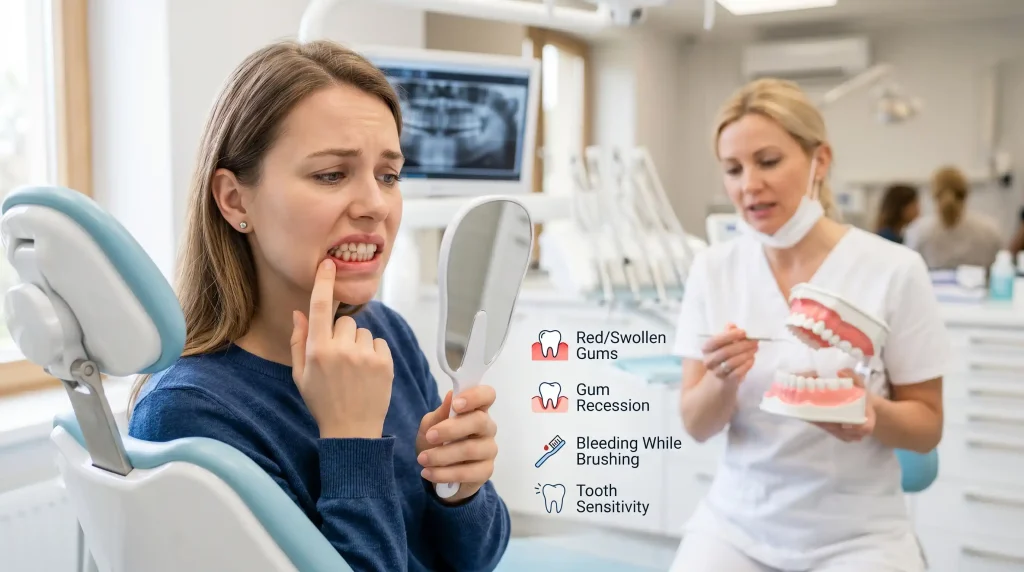
For a lot of people, it starts with very small signs. Little blood while brushing. Mild swelling. Bad smell from the mouth. Since there’s no big pain in the beginning, people think it’s not important.
“Maybe because I brushed too hard.”
“Maybe heat in the body.”
“Maybe it’ll become normal tomorrow.”
This is exactly what happens in many homes. But the thing is… gum disease usually gives warning signs early. We just don’t notice them properly. There are many bleeding gums causes, and not all of them are harmless. Sometimes your gums are literally telling you that something is wrong inside your mouth. So before things become painful and expensive later, let’s see the common signs people should never ignore.
1. Bleeding While Brushing
This is one of the most common signs.
You brush normally in the morning… Then suddenly there’s blood in the sink. The first time, people ignore it. The second time is also maybe okay. But if it keeps happening often, then your gums are not healthy.
Healthy gums generally don’t bleed every week.
There are different bleeding gums causes like:
- plaque buildup,
- smoking,
- poor brushing habits,
- vitamin deficiency,
- gum infection,
- diabetes,
- or not cleaning teeth properly.
Some people even notice bleeding while eating something hard, like chips or an apple. The funny thing is, many people stop brushing properly because they think brushing is causing the bleeding. Actually, plaque buildup becomes worse if cleaning is poor.
And plaque is one of the biggest reasons gum disease starts. At first there may not even be pain. That’s why people keep delaying treatment.
2. Swollen or Red Gums
Healthy gums usually look light pink and tight around the teeth.
If your gums suddenly look:
- dark red,
- swollen,
- soft,
- or puffy,
It may be a sign of early gingivitis. Honestly many people already have mild gingivitis without knowing it.
You may feel:
- slight irritation,
- mild pain while brushing,
- tenderness,
- or discomfort while eating spicy food.
But since the pain is small, nobody takes it seriously. That’s how early stage gingivitis slowly becomes worse. Sometimes people even get used to swollen gums and think it’s normal for them. But gums should not stay swollen daily. Usually bacteria sitting near the gum line keeps irritating the area continuously.
3. Bad Breath That Keeps Coming Back
Everybody gets bad breath sometimes. Morning breath is normal. After eating onion also normal. But if bad smell keeps returning even after brushing, then maybe the problem is deeper. Food particles and bacteria trapped near the gums create a smell slowly.
Still after some time the smell comes back again. This can happen because of early stage gum disease.
Some people don’t notice their own mouth smell because they get used to it. Usually family members or friends notice first.
Using stronger mouthwash won’t solve the actual problem if a gum infection is already there.
4. Teeth Start Looking Bigger
This one sounds strange, but many people notice this suddenly one day. While looking in the mirror, they feel like the teeth look longer than before.
Actually, the teeth are not becoming bigger. The gums are slowly moving backward. This is called gum recession.
It can happen because of:
- untreated gum disease,
- smoking,
- hard brushing,
- plaque buildup,
- or weak gum health.
This is often connected with early-stage gum disease that was ignored for a long time.
You may also start feeling sensitivity while drinking cold water or eating ice cream. Sometimes even cold air feels painful near the teeth. And once gums recede badly, fixing them is not easy.
5. Pain While Eating
Many people ignore this symptom too much.
Maybe while chewing on one side there’s pain eating spicy food the gums burn slightly or cold drinks suddenly feel uncomfortable.
Then after one or two days, the pain reduces again. During early stage gingivitis, gums become sensitive because bacteria irritate the tissue continuously.
You may notice:
- pain while chewing,
- sensitivity,
- burning feeling,
- irritation while brushing,
- or pain near the gum line.
Since the pain comes and goes, people think, “Okay, maybe nothing serious.” But gum problems usually don’t disappear fully without proper care.
6. Swelling With Pus Near the Tooth
This is where things become serious.
If you notice a swollen bump near the gums with pus, then infection may already be present inside the gums. Some people think it’s just a mouth ulcer and wait for it to disappear naturally. Bad idea, honestly.
Understanding the gum abscess stages is important because infection usually spreads slowly step by step.
Stage 1 – Mild Swelling
The gums become red and irritated.
Stage 2 – Infection Starts
Pain slowly increases, and chewing becomes uncomfortable.
Stage 3 – Pus Formation
Pus starts collecting near the gums, and swelling becomes visible.
Stage 4 – Severe Infection
Pain becomes stronger, and swelling may spread to nearby areas.
These gum abscess stages should never be ignored because infection can spread deeper into the gums and bone.
Some people even get fevers or face swelling in severe cases.
7. Teeth Feel Loose
Adult teeth should feel stable. If your tooth feels shaky while chewing food, then gum disease may already be affecting the support around the teeth.
This usually happens after ignoring symptoms for a long time.
You may notice:
- teeth moving slightly,
- gaps increasing,
- pressure while chewing,
- difficulty eating hard foods.
Many people become shocked when dentists say gum disease can affect bone too. But yes, infection doesn’t stay only in the gums if ignored for too long. That’s why small symptoms like bleeding and swelling should not be ignored early.
Why Gum Disease Happens
The main reason is plaque buildup.
Plaque is basically a sticky layer of bacteria that forms on teeth every day. If it’s not cleaned properly, it starts irritating the gums slowly.
Other common reasons include:
- smoking,
- sugary foods,
- stress,
- poor brushing habits,
- diabetes,
- vitamin deficiency,
- skipping dental cleaning.
Nowadays many people are busy and avoid dental checkups unless pain becomes unbearable. That’s one reason gum problems are becoming very common now.
Simple Habits That Help
Honestly, small habits matter more than expensive products.
Brush Gently
Don’t brush too hard thinking teeth will become extra clean.
Floss Sometimes
Food gets trapped between teeth where brushes cannot reach properly.
Drink More Water
Dry mouth can increase bacterial growth.
Avoid Smoking
Smoking affects gum healing badly.
Visit the dentist.
Professional cleaning helps remove tartar buildup properly.
Final Thoughts
The biggest problem with gum disease is this: it starts quietly.
- Little bleeding.
- Mild swelling.
- Bad breath.
- Sensitivity.
That’s why many people ignore it until things become serious later.
Understanding bleeding gums causes noticing early-stage gingivitis, identifying early-stage gum disease, and knowing the different gum abscess stages early can really help protect your gums and teeth. Your mouth usually gives warnings before major damage happens. Most people simply wait too long before taking it seriously.
For more information and dental care support, visit DCP Dental Clinic