

Benefits of Electric Toothbrush vs Manual Toothbrush: Which One Is Better for Your Teeth?
Choosing the right toothbrush is one of the simplest decisions that can make a big difference to your oral health. Many people wonder whether a manual toothbrush is enough or if switching to an electric toothbrush is worth the investment.
The truth is that both types of toothbrushes can keep your teeth clean when used correctly. However, studies have shown that electric toothbrushes can make plaque removal easier and help improve gum health, especially for people who struggle with their brushing technique.
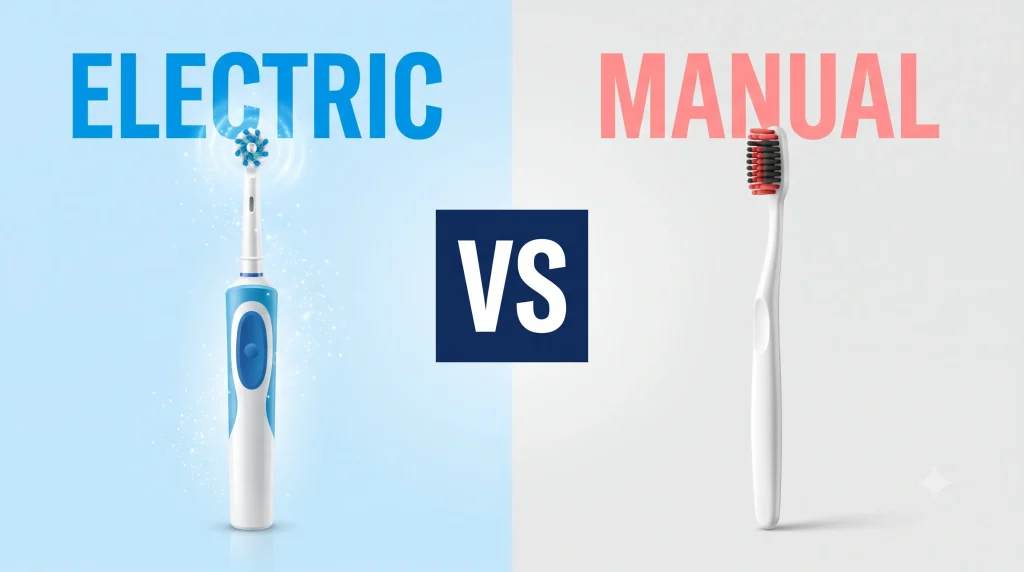
In this guide, we’ll compare the benefits of electric toothbrush vs manual teeth, discuss their advantages and drawbacks, explain which one suits different age groups, and answer the most common questions people ask before buying a toothbrush.
Electric Toothbrush vs Manual Toothbrush: What’s the Difference?
A manual toothbrush depends entirely on your hand movement to clean your teeth.
An electric toothbrush uses a battery-powered toothbrush system to move the brush head automatically. Most models use an oscillating toothbrush or sonic vibrations that create thousands of cleaning movements every minute.
Although both are designed for proper tooth brushing, the cleaning experience and effectiveness can differ.
| Manual Toothbrush | Electric Toothbrush |
| Hand-powered | Battery-powered or rechargeable |
| Requires proper brushing motion | Brush head moves automatically |
| Low cost | Higher initial cost |
| Easy to carry | Needs charging or batteries |
| Depends on brushing technique | Easier for many users |
Benefits of Electric Toothbrush vs Manual Teeth
Many people switch to electric toothbrushes because they make brushing easier while improving cleaning quality.
1. Better Plaque Removal
One of the biggest advantages of an electric toothbrush is its ability to remove plaque more efficiently.
Because the brush head makes thousands of movements every minute, it can clean areas that are often missed with manual brushing.
Better plaque removal may help reduce:
- Tooth decay
- Bad breath
- Gum irritation
- Tartar buildup
2. Improves Gum Health
Healthy gums are as important as healthy teeth.
An electric toothbrush helps clean gently around the gumline without requiring excessive pressure.
Many users notice:
- Less bleeding while brushing
- Reduced gum inflammation
- Cleaner gum margins
- Better long-term gum health
3. Easier to Maintain Proper Brushing Technique
Many people brush too quickly or miss certain areas.
An electric toothbrush helps improve your proper tooth brushing routine because the brush does most of the cleaning movement.
You simply guide it slowly from one tooth to another instead of scrubbing aggressively.
4. Built-In Timers Encourage Better Brushing Habits
Most electric toothbrushes include a two-minute timer.
Some even pause every 30 seconds to remind you to move to another section of your mouth.
This helps you brush evenly without rushing.
5. Pressure Sensors Protect Your Teeth
Brushing too hard can cause enamel and gums severe damage .
Many premium electric toothbrushes include pressure sensors that alert you when you’re applying too much force.
This feature can help protect both your teeth and gums over time.
6. Helpful for Children and Older Adults
Electric toothbrushes are often recommended for people who have difficulty using a manual toothbrush.
This includes:
- Children learning to brush
- Older adults
- People with arthritis
- Individuals with limited hand movement
- Patients wearing braces
Since the brush performs the cleaning action, less hand movement is required.
Advantages of Electric Toothbrush
If you’re thinking about upgrading, here are the main advantages of electric toothbrush models:
- Removes plaque more effectively
- Improves gum health
- Built-in brushing timer
- Pressure sensor prevents aggressive brushing
- Easier to use for braces and dental implants
- Suitable for children and seniors
- Encourages consistent brushing habits
- Available with different cleaning modes
These features can make daily brushing more comfortable and effective.
Disadvantages of Electric Toothbrush
Although there are many benefits, it’s important to understand the disadvantages of electric toothbrush options before buying one.
Higher Cost
Electric toothbrushes cost significantly more than manual toothbrushes.
Replacement brush heads also add to the long-term expense.
Requires Charging
Rechargeable models need regular charging.
If the battery runs out while travelling, you may need a backup toothbrush.
More Bulky
Electric toothbrushes are generally larger than manual brushes, making them slightly less convenient for travel.
Can Feel Unusual Initially
People switching from manual brushing often need a few days to get comfortable with the vibrations.
Despite these disadvantages, many users feel the improved cleaning is worth the investment.
Electric Toothbrush vs Manual Gum Recession
One common concern is whether electric toothbrushes cause gum recession.
The answer is no—not when used correctly.
In fact, gum recession is more commonly linked to:
- Brushing too hard
- Using hard-bristle brushes
- Incorrect brushing technique
- Existing gum disease
Most modern electric toothbrushes use soft-bristle toothbrush heads and include pressure sensors that reduce the risk of brushing too aggressively.
Whether you use a manual or electric toothbrush, gentle brushing is the key to protecting your gums.
Which Toothbrush Is Better for Different People?
Choose a Manual Toothbrush If You:
- Have good brushing habits
- Brush for two minutes twice daily
- Want an affordable option
- Travel frequently
Choose an Electric Toothbrush If You:
- Have braces
- Have dental implants
- Experience bleeding gums
- Find brushing difficult
- Want help maintaining good brushing habits
- Prefer advanced cleaning features
The best toothbrush is the one you’ll use consistently with the correct technique.
Tips for Proper Tooth Brushing
No matter which toothbrush you use, following good brushing habits is essential.
Remember these simple tips:
- Brush twice every day.
- Brush for at least two minutes.
- Use a soft-bristle toothbrush.
- Hold the brush at about a 45-degree angle to your gums.
- Clean every surface of each tooth.
- Brush your tongue gently.
- Replace your toothbrush or brush head every three months.
- Floss once a day.
- Visit your dentist for regular dental check-ups.
A consistent oral hygiene routine is more important than owning the most expensive toothbrush.
Final Thoughts
When comparing the benefits of electric toothbrush vs manual teeth, there isn’t a single answer that fits everyone. A manual toothbrush can keep your teeth healthy if you use the correct technique consistently. An electric toothbrush, however, offers extra support through better plaque removal, improved gum health, built-in timers, and pressure sensors that make daily brushing easier for many people.
The most important factor is maintaining a regular oral hygiene routine, using a soft-bristle toothbrush, brushing for two minutes twice a day, flossing daily, and visiting your dentist regularly. If you’re considering upgrading your toothbrush, understanding the benefits of electric toothbrush vs manual teeth can help you choose the option that best suits your needs and supports long-term oral health.
Frequently Asked Questions
Which is better for teeth, a manual or electric toothbrush?
Both can clean your teeth well when used properly. However, electric toothbrushes often remove more plaque and make it easier to maintain good brushing habits. They can be especially helpful for people with braces, limited hand movement, or gum problems.
What is the 3-3-3 rule for brushing teeth?
The 3-3-3 rule is a simple reminder to:
- Brush 3 times a day
- Brush for 3 minutes
- Wait about 3 minutes after eating acidic foods or drinks before brushing
Not every dentist recommends brushing three times daily. For most people, brushing twice a day with proper technique is sufficient.
What are the disadvantages of using an electric toothbrush?
Some disadvantages include:
- Higher purchase price
- Replacement brush head costs
- Need for charging or batteries
- Slightly bulkier design for travel
Despite these limitations, many users appreciate the extra cleaning features.
What is the 2-2-2 rule for brushing teeth?
The 2-2-2 rule encourages healthy dental habits:
- Brush twice a day
- Brush for 2 minutes each time
- Visit your dentist every 2 times a year (every six months)
This simple routine supports healthy teeth and gums over the long term.