

5 Vitamins & Minerals for Strong Teeth: Nutrients Your Smile Needs Every Day
Strong teeth are not built by brushing and flossing alone. While a good oral hygiene routine helps prevent cavities and gum disease, your teeth also depend on the nutrients you get from your daily meals. The right balance of vitamins and minerals supports healthy enamel, stronger gums, and better overall oral health.
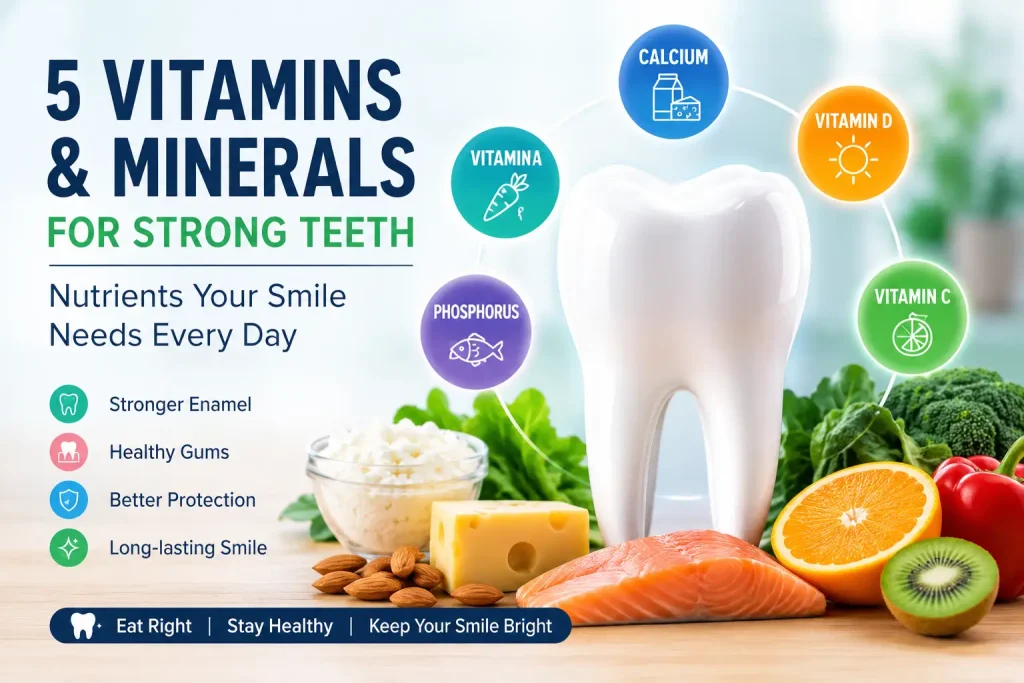
Many people focus on calcium but forget that other nutrients also play an important role in keeping teeth healthy. If your body does not receive enough essential vitamins and minerals, your teeth and gums may become more vulnerable to damage over time.
In this guide, you will learn about the vitamins for strong teeth that support a healthy smile, the foods that provide these nutrients, and simple ways to include them in your everyday diet.
Why Are Vitamins Important for Healthy Teeth?
Your teeth are made from hard mineral structures that need continuous support from your diet. Vitamins and minerals help your body absorb calcium, maintain healthy gums, repair tissues, and protect against infection.
Without enough nutrients, you may notice:
- Weak or sensitive teeth
- Bleeding gums
- Slow healing after dental treatment
- Higher risk of cavities
- Gum inflammation
Eating a balanced diet supports your oral health while also benefiting your overall well-being.
1. Calcium – The Foundation of Strong Teeth
Healthy teeth rely on calcium to stay strong. This mineral supports the outer layer of the teeth and helps maintain the bone that holds them securely in place.
When your body does not get enough calcium, it may draw calcium from your bones, which can gradually affect oral health.
Best Food Sources
- Milk
- Yogurt
- Cheese
- Paneer
- Almonds
- Sesame seeds
- Tofu
- Green leafy vegetables
Signs of Calcium Deficiency
- Weak teeth
- Increased tooth sensitivity
- Frequent cavities
- Weak bones
Adding calcium-rich foods to your daily meals supports stronger teeth throughout life.
2. Vitamin D – Helps Your Body Use Calcium
Calcium works best when your body has enough vitamin D. This vitamin improves calcium absorption and helps maintain strong teeth and bones.
Low vitamin D levels can affect tooth development in children and contribute to weaker teeth in adults.
Natural Sources
- Morning sunlight
- Egg yolks
- Fatty fish
- Fortified milk
- Mushrooms exposed to sunlight
Benefits for Teeth
- Improves calcium absorption
- Supports healthy jawbone
- Helps maintain strong enamel
- Contributes to overall oral health
Spending a short time outdoors and eating vitamin D-rich foods can support healthy teeth.
3. Vitamin C – Keeps Gums Healthy
Healthy gums are just as important as healthy teeth. Vitamin C helps produce collagen, a protein that keeps gum tissue strong and supports healing.
People with low vitamin C levels may experience swollen or bleeding gums.
Foods Rich in Vitamin C
- Oranges
- Guava
- Kiwi
- Strawberries
- Bell peppers
- Tomatoes
- Broccoli
Benefits
- Supports healthy gums
- Helps repair oral tissues
- Promotes faster healing
- Supports the body’s natural defence system
Fresh fruits and vegetables are the easiest way to increase vitamin C intake naturally.
Healthy eating becomes even more important when your teeth or gums are sensitive. If chewing is difficult, explore our guide on soft food for teeth pain to discover nutritious foods that are easy to eat.
4. Phosphorus – Protects Tooth Enamel
Phosphorus works together with calcium to build and maintain strong teeth. It helps strengthen enamel, the protective outer layer that shields teeth from daily wear.
Good Food Sources
- Fish
- Chicken
- Eggs
- Lentils
- Beans
- Pumpkin seeds
- Dairy products
Benefits
- Strengthens enamel
- Supports tooth structure
- Helps maintain healthy bones
- Works alongside calcium for better oral health
Including protein-rich foods in your diet often provides a healthy amount of phosphorus.
5. Vitamin A – Supports Saliva Production
Vitamin A helps maintain healthy soft tissues inside the mouth. It also supports saliva production, which naturally washes away food particles and reduces harmful bacteria.
A healthy flow of saliva lowers the risk of tooth decay.
Foods High in Vitamin A
- Carrots
- Sweet potatoes
- Spinach
- Pumpkin
- Mangoes
- Liver
- Eggs
Benefits
- Supports healthy mouth tissues
- Encourages saliva production
- Helps protect against dry mouth
- Maintains healthy gums
Adding colourful vegetables to your meals is an easy way to increase vitamin A intake.
Foods That Naturally Provide Vitamins for Strong Teeth
A balanced diet usually provides the nutrients your teeth need.
| Nutrient | Foods |
| Calcium | Milk, cheese, yogurt, sesame seeds |
| Vitamin D | Sunlight, eggs, mushrooms, fortified milk |
| Vitamin C | Guava, oranges, kiwi, tomatoes |
| Phosphorus | Fish, lentils, beans, dairy |
| Vitamin A | Carrots, spinach, sweet potatoes |
Choosing whole foods instead of heavily processed snacks benefits both your teeth and your overall health.
Can Supplements Replace Healthy Foods?
Supplements may help when recommended by a healthcare professional, but they should not replace a balanced diet.
Whole foods provide fibre, antioxidants, and other nutrients that work together to support your health. Before taking vitamin supplements, speak with your doctor or dentist if you think you have a deficiency.
Daily Habits That Support Strong Teeth
Good nutrition works best when combined with healthy dental habits.
Follow these simple practices:
- Brush twice a day using fluoride toothpaste.
- Clean between your teeth with floss or interdental brushes.
- Drink plenty of water.
- Limit sugary drinks and sticky snacks.
- Eat balanced meals with fruits, vegetables, dairy, and proteins.
- Visit your dentist regularly for check-ups and professional cleaning.
These habits help protect your teeth while making the most of the nutrients you consume.
When Should You See a Dentist?
If you notice frequent tooth sensitivity, bleeding gums, recurring cavities, or loose teeth, schedule a dental examination. These symptoms may indicate an underlying dental problem or a nutritional deficiency that needs attention.
Early diagnosis allows treatment before small issues become more serious.
Conclusion
Your diet plays an important role in your oral health, but regular dental care is equally important. If you have concerns about weak teeth, bleeding gums, or recurring cavities, don’t ignore the signs.
At DCP Dental Care Professionals, our experienced dentists assess your oral health, identify the underlying cause, and recommend the right treatment to keep your teeth and gums healthy. Book your appointment today and take the next step towards a stronger, healthier smile.
Frequently Asked Questions
1. Which vitamin is most important for strong teeth?
Calcium and vitamin D are among the most important nutrients because they work together to build and maintain strong teeth and healthy bones.
2. Can vitamins repair damaged teeth?
Vitamins cannot repair cavities or broken teeth, but they help support healthy enamel, gums, and overall oral health. Existing dental problems should be treated by a dentist.
3. Which fruit is good for healthy teeth?
Guava, oranges, kiwi, strawberries, and apples provide vitamins that support healthy gums and teeth while also encouraging saliva production.
4. Is calcium alone enough for healthy teeth?
No. Calcium works best alongside vitamin D, phosphorus, vitamin C, and vitamin A. A balanced diet provides better support than relying on a single nutrient.
5. Can poor nutrition affect oral health?
Yes. A lack of essential vitamins and minerals may increase the risk of weak enamel, gum disease, delayed healing, and tooth sensitivity over time.