

Soft Food for Teeth Pain: A Complete Guide to Healthy Food Choices
Tooth pain can make even simple meals feel difficult. Chewing hard or crunchy foods puts pressure on sensitive teeth and gums, making the pain worse. Choosing the right soft food for teeth pain can help you eat comfortably without irritating your teeth further.
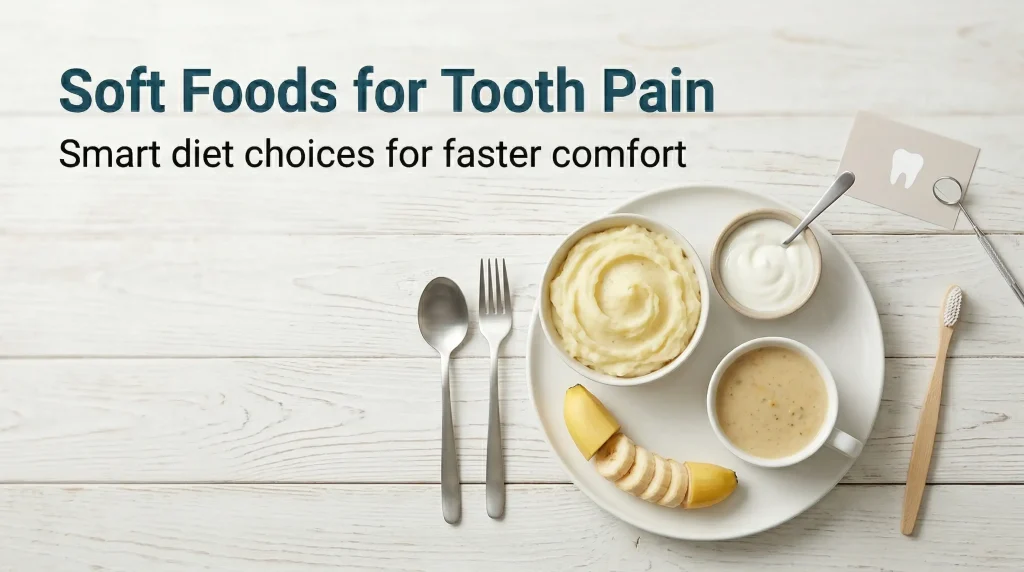
This guide covers the best soft foods to eat during tooth pain, what foods to avoid, and practical tips to make mealtimes easier. If your pain is severe or ongoing, always consult a dentist.
Best Soft Food for Teeth Pain
Here is a practical list of soft foods that are gentle on your teeth and easy to eat when you are in pain.
| Food Type | Best Options |
|---|---|
| Dairy | Yogurt, cottage cheese, paneer |
| Fruits | Banana, avocado, applesauce |
| Vegetables | Mashed potatoes, boiled carrots |
| Protein | Scrambled eggs, soft fish, dal |
| Grains | Oatmeal, soft rice, pasta |
| Soups | Warm soup, broth |
| Indian foods | Idli, pongal, khichdi |
Dairy-Based Soft Foods
Dairy products are some of the easiest foods to eat during tooth pain. They are smooth, require no chewing, and provide nutrients your body needs during recovery.
Good options include:
- Yoghurt – Plain, unsweetened yoghurt is cool, smooth, and soothing. Avoid varieties with fruit chunks or added sugar.
- Milk – Warm or room-temperature milk is gentle on sensitive teeth.
- Paneer (soft) – Soft, fresh paneer can be mashed or eaten in small pieces without much effort.
- Cheese (soft) – Soft cheese like cream cheese or cottage cheese is easy to eat and high in protein.
- Kheer or milk pudding – A classic Indian comfort food that is both filling and gentle.
Avoid very cold dairy products if you have sensitivity to temperature. Room temperature or slightly warm works best.
Soft Fruits
Fresh fruits are nutritious, but not all fruits are safe to eat during tooth pain. Hard or crunchy fruits like apples and guavas should be avoided. Stick to soft options, especially soft foods for tooth pain.
Recommended soft fruits:
- Banana – Naturally soft, easy to mash, and filling.
- Ripe papaya – Gentle on gums and aids digestion.
- Ripe mango pulp – Smooth and easy to consume without chewing.
- Avocado – Creamy texture, high in healthy fats.
- Steamed or stewed pears – Cooking softens the fruit further.
These fruits do not irritate teeth and provide essential vitamins during recovery. Avoid citrus fruits like oranges and lemon, as their acidity can worsen tooth sensitivity.
Cooked Vegetables
Raw vegetables are too hard and crunchy during tooth pain. But cooked vegetables become soft enough to eat comfortably with very little chewing.
Try these cooked vegetable options:
- Mashed potato – Smooth, filling, and easy to prepare.
- Boiled carrots – Soft when cooked well.
- Steamed spinach or palak – Easy to chew and nutrient-rich.
- Cooked bottle gourd – Very soft and gentle on gums.
- Pumpkin puree – Naturally smooth and easy to eat.
Season with minimal spice. Non-spicy foods for tooth pain are essential because spices can irritate sensitive gum tissue.
Protein-Rich Soft Foods
Your body needs protein to repair tissue and heal properly. Many high-protein foods are also easy to eat during dental pain and fit well within soft food for teeth pain.
Good soft protein options:
- Scrambled eggs – Soft, quick to make, and easy to eat.
- Boiled egg – Soft and filling without requiring much chewing.
- Soft dal (lentil soup) – A well-cooked dal with a smooth consistency is both nourishing and gentle.
- Fish (boiled or steamed) – Soft fish like rohu or pomfret, when cooked well, flakes easily and requires minimal chewing.
- Hummus – Smooth chickpea paste that can be eaten with soft bread or alone.
Avoid fried protein options like pakoras or crispy chicken. These require biting force and can worsen pain.
Soft Indian Foods for Teeth Pain
Indian cuisine has many naturally soft, comforting foods ideal for dental pain. These are familiar, easy to prepare, and gentle on the mouth.
Best Indian food to eat during toothache:
- Idli – Steamed, soft, and requires almost no chewing.
- Khichdi – A classic mix of rice and lentils, soft and easy on the stomach and teeth.
- Upma (soft) – When cooked with extra water, upma becomes very soft.
- Sabudana khichdi – Soft tapioca pearls that dissolve easily.
- Soft chapati soaked in dal – A simple way to soften an everyday meal.
- Curd rice – Cooling, gentle, and one of the best foods for sensitive teeth.
- Rava porridge (semolina porridge) – Smooth texture, easy to swallow.
These foods are low in spice, easy to prepare, and naturally suited for a soft diet during dental pain.
Foods to Avoid During Tooth Pain
Avoiding certain foods plays a key role in managing tooth pain effectively
Avoid these foods:
- Hard foods – nuts, raw carrots, hard biscuits, chips
- Crunchy snacks – popcorn, papadams, crackers
- Sticky foods – toffees, chewing gum, sticky sweets
- Spicy foods – hot curries, pickles, chilli-heavy dishes
- Very cold or very hot foods – ice cream directly from the freezer, steaming hot tea
- Acidic foods – citrus fruits, vinegar-based dishes, tamarind
- Sugary foods – excessive sugar can worsen tooth decay and pain
These foods either require too much chewing, irritate sensitive tissue, or trigger temperature-based pain in sensitive teeth, making them unsuitable when choosing soft food for teeth pain.
Tips for Eating Comfortably with Tooth Pain
Small changes in how you eat can make a big difference during tooth pain.
- Chew on the opposite side – Keep pressure away from the painful tooth.
- Eat slowly – Rushing increases the chance of accidentally biting hard.
- Cut food into tiny pieces – Even soft foods are easier when cut small.
- Use lukewarm water to rinse – After meals, gently rinse with warm salt water.
- Avoid skipping meals – Your body needs nutrition to heal. Soft foods make eating possible even in pain.
- Drink through a straw carefully – Avoid straws if you have had an extraction, as suction can disturb the healing clot.
These simple steps help you eat without worsening pain or delaying recovery.
When to See a Dentist for Tooth Pain
Soft foods help manage discomfort, but they are not a substitute for dental treatment. If your tooth pain lasts more than two to three days, gets worse, or is accompanied by swelling or fever, you need professional care.
If tooth pain continues for several days and you are living in Coimbatore, visiting a dental clinic in Coimbatore can help identify the exact cause and provide proper treatment.
Do not ignore persistent pain. Early treatment is always easier, less costly, and more effective than waiting.
Conclusion
Choosing the right soft food for tooth pain can greatly improve comfort and support faster healing. Eating foods that are soft, mild, and easy to chew helps reduce pressure on sensitive teeth while preventing further irritation. Avoid hard, crunchy, spicy, or acidic foods as they can worsen discomfort. If the pain continues for more than a few days, it is important to consult a dentist for proper evaluation and treatment.
FAQs About Soft Food for Teeth Pain
1. What is the best soft food to eat with a toothache?
Yoghurt, idli, khichdi, mashed potato, and curd rice are excellent choices. They are easy to eat, gentle on the gums, and provide enough nutrition during recovery.
2. Can I eat rice when I have tooth pain?
Yes. Soft-cooked rice, especially curd rice or khichdi, is one of the safest options. Make sure the rice is well-cooked and not too hot before eating.
3. How long should I follow a soft diet after dental treatment?
Most dentists recommend a soft diet for at least three to five days after procedures like extraction or root canal. Follow your dentist’s specific advice for your case.
4. Are cold foods good for tooth pain?
Not always. Very cold foods can trigger sensitivity pain in some people. Room-temperature or slightly warm foods are usually more comfortable and less likely to irritate.
5. What Indian foods are safe to eat during tooth pain?
Idli, curd rice, soft upma, sabudana khichdi, boiled dal, and rava porridge are all gentle, familiar, and easy to eat during tooth pain. Avoid adding too much spice or salt.