

Invisalign Treatment Process Explained: Step-by-Step Guide to Your Smile Transformation
Feeling confident about your smile can make a big difference in everyday life.
Many people think about straightening their teeth for years but keep postponing treatment because they worry about metal braces, discomfort, or how long the process will take.
This is where Invisalign has changed things for many patients.
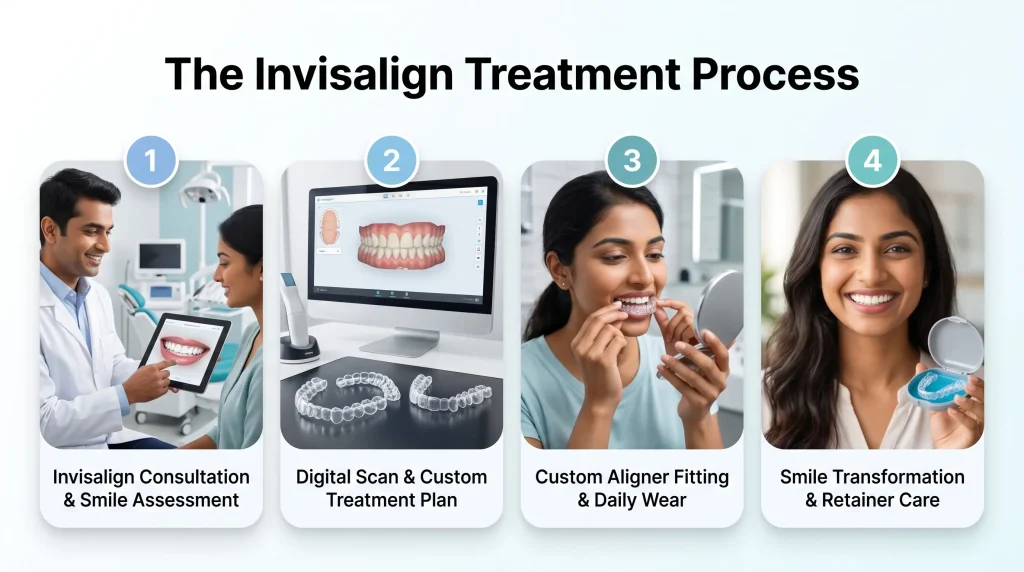
The Invisalign treatment process is designed to be simple, comfortable, and easy to fit into everyday life. Instead of wires and brackets, Invisalign uses clear removable aligners that gradually move your teeth into better positions.
But what actually happens after you decide to start treatment?
Let’s walk through the entire journey so you know exactly what to expect.
1. The First Step: Invisalign Consultation
Every successful smile transformation starts with a professional Invisalign consultation.
During this appointment, your dentist or orthodontist will examine your teeth, bite, and overall oral health. They will discuss your concerns and understand what you would like to improve about your smile.
Some people want to fix crowded teeth.
Others want to correct gaps, overbites, underbites, or uneven alignment.
Many people don’t realize this.
Not every smile is the same, which is why every Invisalign treatment plan is customized according to individual needs.
At this stage, digital scans, photographs, and dental records are usually taken to create a complete picture of your teeth.
2. Creating a Personalized Invisalign Treatment Plan
Once your dental records are collected, the next step is designing your Invisalign treatment plan.
Advanced digital technology is used to create a virtual model of your teeth.
This helps your dentist carefully plan how your teeth will gradually shift into their ideal positions throughout the treatment.
A great advantage of this stage is that you can get a visual idea of how your smile may improve over time before starting the aligners.
Many patients feel motivated when they see how their teeth may look after treatment is completed.
Your orthodontic treatment plan will include:
- Expected treatment duration
- Number of aligners required
- Predicted tooth movements
- Estimated smile correction results
This customized approach helps ensure predictable and efficient treatment outcomes.
3. Manufacturing Your Custom Aligners
After your treatment plan is approved, your custom aligners are created.
Unlike traditional braces that are adjusted manually, Invisalign aligners are designed specifically for your teeth.
Each aligner is slightly different from the previous one.
These small differences are what gradually guide your teeth into their desired positions.
The aligners are made from smooth, transparent material that fits snugly over your teeth.
Most people won’t even notice you’re wearing them.
This is one of the biggest reasons patients choose Invisalign clear aligner treatment over conventional braces.
4. Receiving Your First Set of Aligners
When your aligners are ready, you’ll return to your dentist for fitting.
Your dentist will check the fit and ensure everything sits properly.
You will also receive instructions about:
- How to wear your aligners
- When to remove them
- Cleaning methods
- Daily wear requirements
To keep your treatment moving in the right direction, aligners need to be worn for most of the day.
You should take them out only during meals and while brushing or flossing your teeth.
Most people ignore this.
Wearing aligners for fewer hours than recommended can delay your progress and extend treatment time.
5. Following the Invisalign Aligner Process Daily
Invisalign gently moves your teeth into better positions over time using a series of custom-made aligners.
Each aligner applies gentle pressure to specific teeth.
Over time, these controlled forces encourage teeth to shift into better alignment.
Patients usually switch to a new set of aligners every one to two weeks, depending on their dentist’s instructions.
At first, a new aligner may feel slightly tight.
This is completely normal.
In fact, it is often a sign that the aligner is actively working.
Many patients compare the feeling to mild pressure rather than pain.
After a couple of days, the discomfort usually disappears.
6. Regular Progress Checkups
Although Invisalign involves fewer clinic visits than traditional braces, regular checkups are still important.
During these visits, your dentist will check the progress of your teeth and ensure everything is moving according to plan.
These visits help ensure your Invisalign treatment steps are progressing according to plan.
During appointments, your dentist may:
- Evaluate tooth movement
- Check aligner fit
- Make adjustments if needed
- Provide additional aligners
These appointments give you a chance to see how far your treatment has progressed and what improvements are happening along the way.
Small corrections during treatment can help achieve better final results.
7. Attachments and Additional Adjustments
Some patients may require small tooth-colored attachments.
These are tiny composite bumps bonded to certain teeth.
At first, the idea may sound concerning.
But they are usually barely visible.
Attachments help aligners grip teeth more effectively and achieve complex movements that would otherwise be difficult.
Depending on your case, other minor adjustments may also be included in your Invisalign treatment process.
These enhancements help improve accuracy and efficiency.
8. Maintaining Good Oral Hygiene During Treatment
One advantage of removable aligners is the ability to maintain excellent oral hygiene.
Unlike braces, there are no brackets or wires trapping food particles.
However, proper cleaning remains important.
You should:
- Brush after meals
- Floss daily
- Clean aligners regularly
- Avoid placing dirty aligners back into your mouth
This is where problems usually start.
Some patients skip brushing after meals and immediately wear their aligners again.
This can increase the risk of plaque buildup, bad breath, and tooth decay.
Developing good habits during treatment helps protect both your teeth and aligners.
9. Tracking Invisalign Results Over Time
One of the most rewarding parts of treatment is watching your smile gradually improve.
The changes may seem small week by week.
Then one day, you compare your current smile to old photographs and notice a remarkable difference.
Many patients report improvements in:
- Tooth alignment
- Bite function
- Smile appearance
- Confidence levels
Invisalign results are often achieved through steady progress rather than dramatic overnight changes.
Patience plays an important role.
Trusting the process is key.
10. Completing Your Invisalign Smile Correction Journey
After your final aligners have been worn, your dentist will evaluate the outcome.
In many cases, patients achieve their desired Invisalign smile correction at this stage.
However, treatment doesn’t completely end here.
Your dentist will usually recommend retainers.
Retainers help maintain your new smile by preventing teeth from shifting back to their previous positions.
Many people don’t realize this.
Teeth naturally have a tendency to move throughout life.
Retainers help keep your teeth in their new positions and maintain the results achieved through treatment.
How Long Does the Invisalign Treatment Process Take?
Treatment duration varies from person to person.
Factors that influence treatment time include:
- Severity of alignment issues
- Patient compliance
- Type of bite correction required
- Overall treatment goals
Mild cases may take only a few months.
More complex cases can require a year or longer.
Your Invisalign consultation will provide a more accurate estimate based on your specific needs.
Who Is a Good Candidate for Invisalign?
Invisalign can successfully treat many common orthodontic concerns, including:
- Crowded teeth
- Spacing issues
- Mild to moderate overbites
- Underbites
- Crossbites
- Open bites
The best way to determine eligibility is through a professional assessment.
A personalized Invisalign treatment plan ensures the treatment is suitable for your unique dental condition.
Tips for Getting the Best Invisalign Results
If you want smoother treatment and better outcomes, follow these simple habits:
Wear Aligners Consistently
Aim for 20–22 hours daily.
Consistency is essential.
Keep Aligners Clean
Clean aligners regularly to maintain oral hygiene.
Attend Scheduled Appointments
Regular reviews help keep treatment on track.
Follow Your Dentist’s Instructions
Each smile is different, so personalized guidance matters.
Be Patient
Teeth move gradually.
Small daily progress leads to significant long-term improvements.
Final Thoughts
The Invisalign treatment process is much more than simply wearing clear trays.
It is a carefully planned journey that begins with a detailed Invisalign consultation, follows a customized Invisalign treatment plan, and progresses through a series of Invisalign treatment steps designed to move your teeth safely and effectively.
For people looking for a discreet way to straighten their teeth, Invisalign clear aligner treatment offers a modern and comfortable solution.
The process requires commitment, but the reward is worth it.
A healthier bite, improved confidence, and a smile you feel proud to share can make a lasting difference in everyday life.
If you’re considering Invisalign treatment in Coimbatore, our specialists Doctors at DCP Dental Clinic can help you understand your options and create a personalized treatment plan. Book a consultation today and take the first step toward achieving a straighter, more confident smile.