

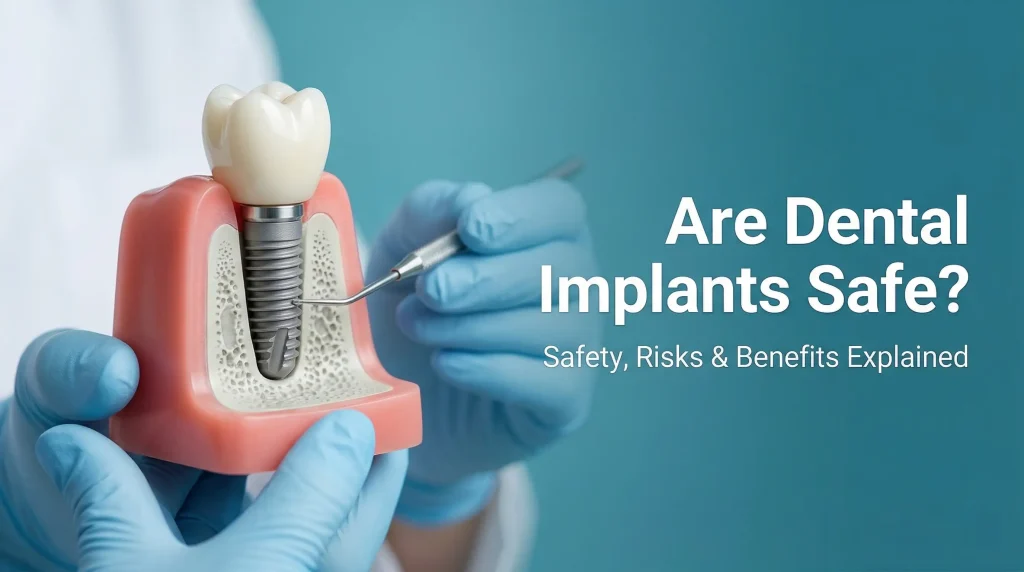
If you are considering a tooth replacement, you have likely asked is dental implants safe? The answer is yes. Dental implants are a clinically proven, widely approved solution for missing teeth. They have been used successfully for over five decades with an excellent safety record.
Like any surgical procedure, implants carry some factors worth understanding. This guide tells you through how implants work, their success rate, possible risks, and how to ensure the best outcome. Whether you are just exploring options or ready to book a consultation, this article gives you clear, balanced answers to the question so many patients ask before starting treatment.
What Are Dental Implants?
Dental implants are artificial tooth root replacements made from medical-grade titanium and placed securely into the jawbone. Over time, the implant integrates with the bone, creating a stable base for a custom-designed crown that closely resembles a natural tooth in both appearance and function.
Basic Structure of a Dental Implant
A dental implant consists of three main components:
- Implant post – a titanium screw positioned inside the jawbone to act as an artificial tooth root
- Abutment – a small connecting structure that attaches the post to the crown
- Crown – the visible part of the tooth, carefully designed to match the colour and shape of surrounding teeth
How Dental Implants Replace Missing Teeth
After placement, the bone gradually grows around the titanium post through a process called osseointegration. This fusion gives implants their stability and strength. The process typically takes three to six months, after which the implant becomes a permanent part of your jaw.
Are Dental Implants Safe for Most Patients?
Patients often wonder — is dental implants safe for someone in my condition? For healthy adults, the answer is almost always yes. Implants are well-tolerated and carry regulatory approval from global health bodies including the US FDA. Titanium — the material used — is biocompatible, meaning it does not cause adverse reactions in most people.
Safety Approval and Medical Standards
Dental implants are regulated medical devices manufactured to strict international standards. Procedures are performed under local anaesthesia using sterile equipment. Experienced dental surgeons follow defined clinical protocols to minimise infection and surgical risk.
Success Rate of Dental Implants
Studies consistently show dental implant success rates between 95% and 98% over ten years. This makes implants one of the most reliable elective procedures in modern dentistry — far outperforming bridges and dentures in long-term performance.
Dental Implant Success Rate
Average Success Rate Percentage
Research places the dental implant success rate percentage at:
- 97–98% at five years
- 95–96% at ten years
- 90–92% at fifteen to twenty years
No other tooth replacement option delivers this level of long-term reliability. These numbers alone answer a big part of the question — is dental implants safe over time? with clear, evidence-backed confidence.
Factors That Improve Implant Success
- Good daily oral hygiene
- Not smoking during and after healing
- Controlled blood sugar and blood pressure
- Regular dental check-ups
- Choosing an experienced implant dentist
Risks and Possible Side Effects of Dental Implants
Complications related to dental implants are relatively rare, and most patients experience only minor temporary effects after the procedure. These symptoms are usually part of the normal healing process and improve within a short period.
Common Short-Term Side Effects
- Slight swelling or minor bruising around the treated area
- Mild discomfort that can be controlled with prescribed medication
- Minimal bleeding during the first 24–48 hours after surgery
These effects are expected after implant placement and generally reduce gradually within a few days as the tissues begin to heal.
Rare Complications to Know
In rare cases, patients may experience:
- Infection at the implant site
- Nerve irritation causing temporary numbness
- Implant failure due to poor bone integration
- Peri-implantitis — a gum infection around the implant base
These affect a very small percentage of patients and are largely preventable with proper care and screening.
How Dentists Reduce Risks
Before surgery, dentists conduct CBCT scans, review medical history, and assess bone volume. Post-operative care instructions are personalised. Follow-up appointments allow early detection of any concern before it develops further.
Who Is a Good Candidate for Dental Implants?
Oral Health Requirements
Candidates need healthy gums, no active infections, and good oral hygiene. Any existing dental problems are treated before implant placement.
Bone Density Considerations
Adequate jawbone volume is essential to hold the implant. Patients with bone loss may require a bone grafting procedure first, which adds time but makes implants accessible to more patients.
Medical Conditions to Discuss
Conditions like diabetes, osteoporosis, or use of blood thinners require evaluation. A common question at this stage is — is dental implants safe if I have a chronic health condition? The answer depends on how well the condition is managed. Patients considering dental implant treatment in Coimbatore should share their full medical history with their dental surgeon to ensure a safe, personalized treatment plan.
Are Dental Implants Safe Long Term?
This is one of the most searched questions — is dental implants safe for the long term? Based on clinical evidence spanning decades, yes. Long-term outcomes are overwhelmingly positive when patients maintain proper care.
Durability of Implant Material
Titanium does not corrode, degrade, or react with body fluids. It is the same material used in orthopaedic joint replacements. Zirconia is a newer ceramic alternative for patients who prefer metal-free solutions — both materials show strong long-term safety profiles.
Maintenance for Long-Term Safety
Implants do not decay, but the surrounding gum and bone still need consistent care. Brush twice daily, use interdental brushes, and attend professional cleaning every six months. These habits protect the implant and surrounding tissue for decades.
Benefits of Choosing Dental Implants
Natural Appearance and Function
Dental implant crowns are carefully designed to blend with your existing teeth in both shape and colour. They allow you to bite and chew normally, providing stability without movement or discomfort while eating or speaking.
Jawbone Protection
When a tooth is missing, the surrounding jawbone may gradually lose density over time. Dental implants act like artificial tooth roots, stimulating the bone and helping maintain its strength, which also supports the natural shape of the face.
Long-Term Tooth Replacement Solution
Unlike traditional bridges that may require support from nearby teeth, implants function independently without affecting adjacent healthy teeth. With proper care, they can remain effective for many years, making them a reliable and long-lasting solution for replacing missing teeth.
How to Make Dental Implant Treatment Safer
Choosing an Experienced Dentist
Select a dentist with formal implantology training and modern imaging equipment. Ask about their experience with complex cases and what protocols they follow for infection control.
Following Aftercare Instructions
Stick to a soft diet for the first few days, take prescribed medications, avoid smoking, and do not disturb the surgical site. These steps directly support safe healing.
Maintaining Oral Hygiene
Bacteria around implants can cause peri-implantitis, which damages surrounding bone. Daily cleaning and routine check-ups are the most effective defence against this risk.
Common Myths About Dental Implant Safety
Myth vs Fact
Myth: Implants are extremely painful. Fact: Anaesthesia ensures a pain-free procedure. Post-surgery soreness is mild and manageable.
Myth: Implants are only for young patients. Fact: Age is not a barrier. Bone quality and overall health matter far more than age.
Myth: Titanium causes allergies. Fact: Titanium allergy is extremely rare. Zirconia implants are available for those with sensitivity.
Myth: Implants fail frequently. Fact: With a 95–98% success rate, implant failure is uncommon and usually tied to avoidable risk factors.
Conclusion
Dental implants are safe, proven, and built to last. With a success rate of up to 98% and decades of clinical evidence behind them, they remain the most reliable tooth replacement option available. If you are still asking is dental implants safe ? before making your decision — speak with a qualified dental surgeon who can assess your individual condition and guide you toward the right treatment plan with confidence. If you are looking for dental implants in Coimbatore, DCP Dental Clinic offers advanced implant treatment supported by experienced specialists and modern dental technology to ensure safe and effective results.
FAQs
Are dental implants painful?
The procedure uses local anaesthesia, so there is no pain during surgery. Mild soreness in the first few days is normal and managed easily with prescribed medication.
Can dental implants fail?
Failure is rare but possible. Causes include smoking, poor oral hygiene, or uncontrolled health conditions. Most cases can be retreated after addressing the root cause.
Is dental implants safe for elderly patients?
Yes. Many patients in their 70s and 80s receive implants successfully. Safety depends more on bone quality and overall health than age alone. So if an elderly patient asks is dental implants safe for me — the answer is almost always yes, with proper evaluation.
How long do dental implants last?
With good oral hygiene and regular dental care, implants can remain functional for decades.. The titanium post may last a lifetime. The crown may need replacement after 15 to 20 years depending on wear.
Are dental implants better than dentures?
In most cases, yes. Implants are fixed, stable, preserve jawbone health, and require no adhesives. They offer a far more natural experience than removable dentures over the long term.